


Texte
Welcome to EBVS, European Board of Veterinary Specialisation

 Committed to ensure the highest quality of veterinary medicine in Europe by specialisation
for better quality of life of animals and people.

Text
Video file

Veterinary Specialist Colleges

Block

Colleges
European College of Zoological Medicine

European College of Zoological Medicine (ECZM) Objectives: To promote research and elevate the proficiency of veterinarians in zoological medicine in Europe. To establish guidelines for post-graduate education, guiding the pathway to becoming a EBVS® European Veterinary Specialist in Zoological Medicine. To administer examinations and certify veterinarians as  EBVS® European Veterinary Specialists in Zoological Medicine. To advocate for communication and the distribution of knowledge about zoological medicine, emphasizing the essential role of ECZM members in matters related to health, welfare, and biosecurity in zoological care, management, and medicine.

European College of Small Ruminant Health Management

The primary objectives of the European College of Small Ruminant Health Management (ECSRHM) are: To advance veterinary expertise in small ruminant health management, encompassing sheep and goats, by championing research and elevating the capabilities of veterinarians in this speciality. To formulate guidelines and benchmarks for postgraduate education, ensuring veterinarians are on a clear trajectory to attain the title of European Veterinary Specialist® in Small Ruminant Health Management. To organize examinations and certify veterinarians as European Veterinary Specialists® in Small Ruminant Health Management, while fostering a consistent, evidence-based medicine (EBM) approach. To facilitate communication, continuous education, and the distribution of knowledge in small ruminant health management amongst both professionals and the wider audience, underpinning the significance of original scientific research and contributions to pertinent literature.

European College of Porcine Health Management

The primary objectives of the European College of Porcine Health Management (ECPHM) are to advance porcine health management in Europe by enhancing the health and welfare of pigs, ensuring the production of safe and high-quality pork products for consumers, and bolstering the economic profitability of the sector through expert care, all while respecting the environment for sustainable agriculture. The ECPHM has set benchmarks for  EBVS® European Veterinary Specialists in Porcine Health. The college is responsible for: Formulating methods for postgraduate teaching in porcine health management, primarily via residency programs. Training and qualifying professionals as specialists in porcine health management. Certifying veterinarians as specialists in the field. Setting standards for post-graduate education in porcine health. Championing advancements in porcine health management. Designing and offering continuous educational courses in the specialty. Encouraging research in porcine health and facilitating knowledge sharing.

European College of Laboratory Animal Medicine

European College of Laboratory Animal Medicine (ECLAM) The main goal of ECLAM is to enhance expertise in laboratory animal medicine. This is achieved by: Establishing graduate teaching methods, particularly through residency programs in laboratory animal medicine Training and certifying veterinarians as EBVS® European Veterinary Specialists in Laboratory Animal Medicine Setting guidelines for post-graduate education Championing improvements in laboratory animal welfare and medicine Organizing ongoing educational courses in laboratory animal medicine. Conducting scientific research

European College of Poultry Veterinary Science

The primary objectives of the European College of Poultry Veterinary Science (ECPVS) are: To enhance poultry veterinary science throughout Europe by endorsing research and heightening the skills of veterinarians in this domain. To set forth guidelines and requisite standards for postgraduate education, creating a clear pathway for veterinarians to achieve the title of  EBVS® European Veterinary Specialist in Poultry Veterinary Science. To administer examinations and certify veterinarians as European Veterinary Specialists in Poultry Veterinary Science, ensuring they prioritize the health and welfare of poultry, contribute to producing safe, high-quality products for consumers, and support the sector's economic vitality, all within the framework of sustainable agriculture. To stimulate communication, continuous learning, and the dissemination of knowledge in poultry veterinary science amongst both professionals and the broader community.

European College of Animal Reproduction

The primary goals of the European College of Animal Reproduction (ECAR) are: To elevate expertise in animal reproduction in Europe, encompassing reproductive medicine, surgery, and biotechnology. To establish, train, and certify EBVS® European Veterinary Specialists in animal reproduction. To devise comprehensive post-graduate education guidelines essential for specialization in animal reproduction. To conduct examinations and qualify veterinarians as specialists to benefit the veterinary patient, owners, and the wider public. To promote research, knowledge expansion, and its dissemination in the field of animal reproduction.

European College of Veterinary Pathologists

The primary objectives of the European College of Veterinary Pathologists (ECVP) are: To advance veterinary pathology in Europe, supporting research and elevating veterinarians' expertise in this domain. To provide clear guidelines for specialization in veterinary pathology. To conduct thorough examinations, certifying veterinarians as  EBVS® European Veterinary Specialists in Pathology. To organize continuous educational courses, ensuring professionals stay updated in the field. To foster research and ensure wide dissemination of knowledge in veterinary pathology to both peers and the broader community.

European Veterinary Dental College

European Veterinary Dental College (EVDC) Objectives: To foster research and elevate the proficiency of veterinarians in the art and science of veterinary dentistry. To establish guidelines for post-graduate education, guiding the pathway to becoming a  EBVS® European Veterinary Specialist in Veterinary Dentistry. To administer examinations and certify veterinarians as EBVS® European Veterinary Specialists in Veterinary Dentistry. To advocate for communication, collaboration with national and international veterinary dental associations, and the dissemination of knowledge in veterinary dentistry.

European College of Veterinary Internal Medicine – Companion Animals

The primary objectives of the European College of Veterinary Internal Medicine – Companion Animals (ECVIM-CA) are: To champion advancements in companion animal internal medicine, cardiology, and oncology. This ensures continuous growth in research, innovation, and best practices in these specialized fields. To define clear and comprehensive guidelines for post-graduate education, ensuring that veterinarians are thoroughly prepared to specialize in areas of companion animal internal medicine, cardiology, or oncology. To diligently conduct examinations, subsequently certifying veterinarians as  EBVS® European Veterinary Specialists in Companion Animal Internal Medicine, Cardiology, and Oncology. This process ensures that only the most skilled and knowledgeable professionals attain this recognition. To cultivate a thriving community where knowledge sharing is paramount. This includes promoting research, facilitating specialized training programs, organizing continuing educational courses, and championing the dissemination of knowledge in companion animal internal medicine, cardiology, and oncology among veterinary professionals and the broader public.

European Veterinary Parasitology College

European Veterinary Parasitology College (EVPC) Objectives: To promote research and elevate the proficiency of veterinarians in veterinary parasitology, focusing on the epidemiology, pathogenesis, diagnosis, therapy, and control of parasitic diseases impacting animals. To establish guidelines for post-graduate education, guiding the pathway to becoming a  EBVS® European Veterinary Specialist in Veterinary Parasitology. To administer examinations and certify veterinarians as  EBVS® European Veterinary Specialists in Veterinary Parasitology. To foster the development of a new generation of skilled and experienced veterinary parasitologists to meet Europe's future veterinary needs in teaching, diagnostic laboratory work, industry, and research, while also advocating for communication and knowledge-sharing in the field of veterinary parasitology.
Text

Countries

Image
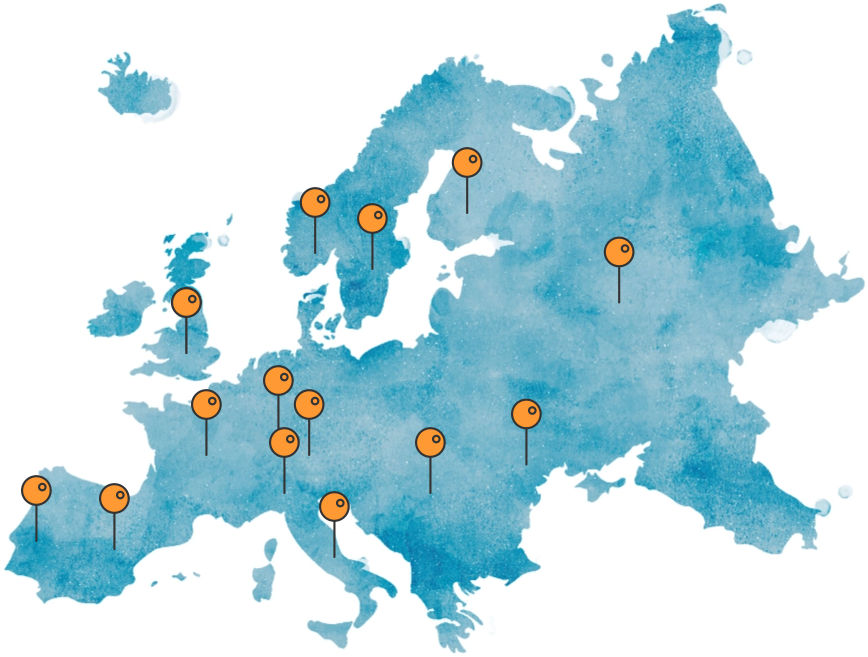
EBVS organisation map

EBVS® is a European organisation focussed on veterinary specialisation in the Member States of the European Union and its neighbours, particularly Switzerland and Norway. EBVS specialists are also found in other countries.

Text

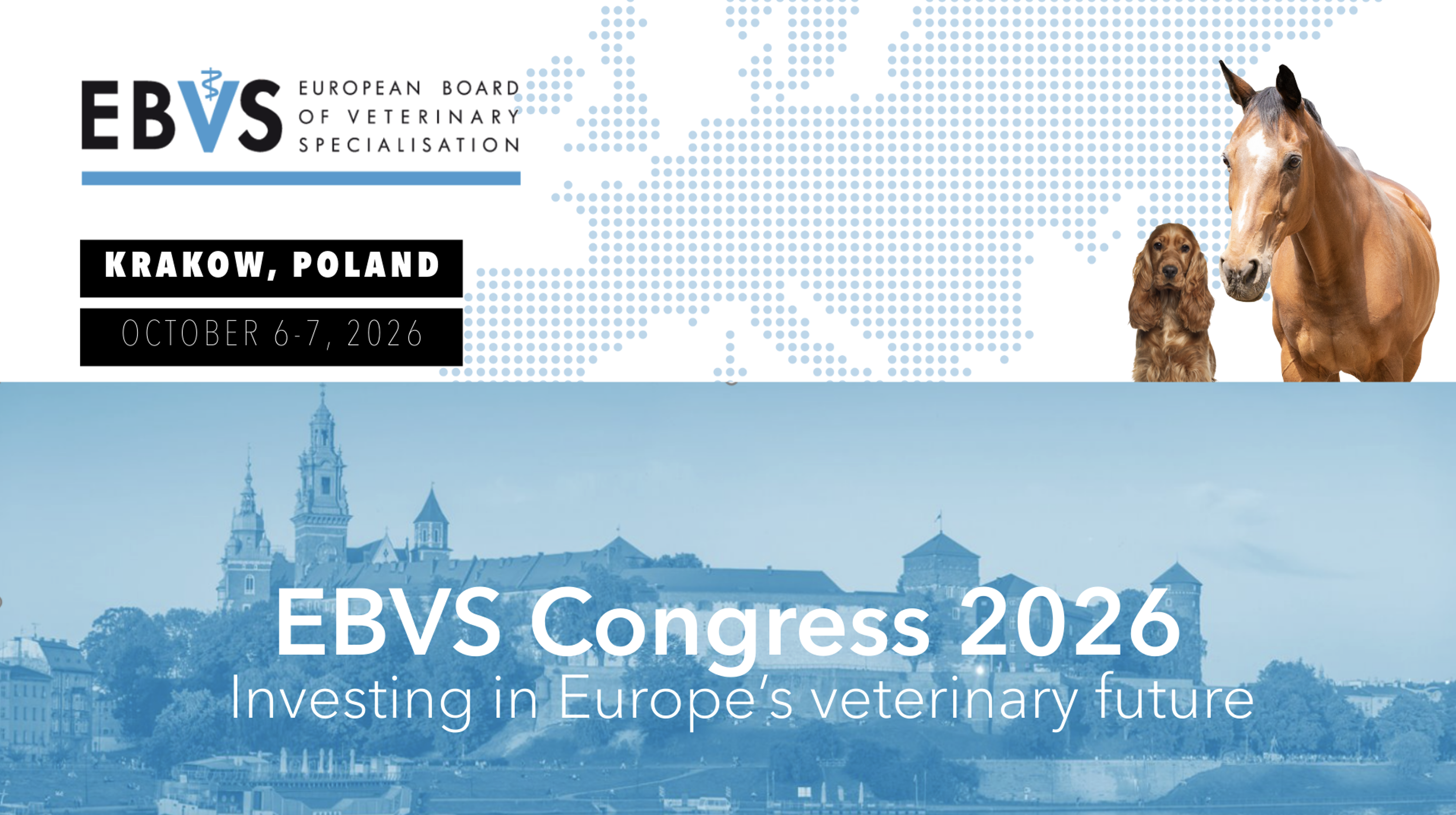
 EBVS Congress 2026
Image
2
Block

Vacancies

Publication date: 23/01/2026

King Animal Hospital is seeking an exceptional Chief Medical Officer – Equine to provide clinical, strategic, and operational leadership across our rapidly expanding Equine Services division. This is a rare opportunity to shape the future of equine emergency and referral medicine within a privately owned, innovation-driven hospital.
This role reports directly to the Chief Executive Officer (CEO) and will succeed our current CMO of Equine, who is planning for retirement.

Publication date: 29/10/2025

Residency Position in Veterinary Behavioural Medicine (ECAWBM-BM) – Ghent University
The Faculty of Veterinary Medicine at Ghent University invites applications for a three-year Residency Training Programme in Behavioural Medicine, accredited by the EBVS® European College of Animal Welfare and Behavioural Medicine – Behavioural Medicine subspecialty (ECAWBM-BM). The residency will be conducted under the direct supervision of Prof. Anouck Haverbeke, EBVS® European Veterinary Specialist in Behavioural Medicine.
The programme starts on 1 April 2026. The deadline for applications is 15 February 2026.